Occasion 01
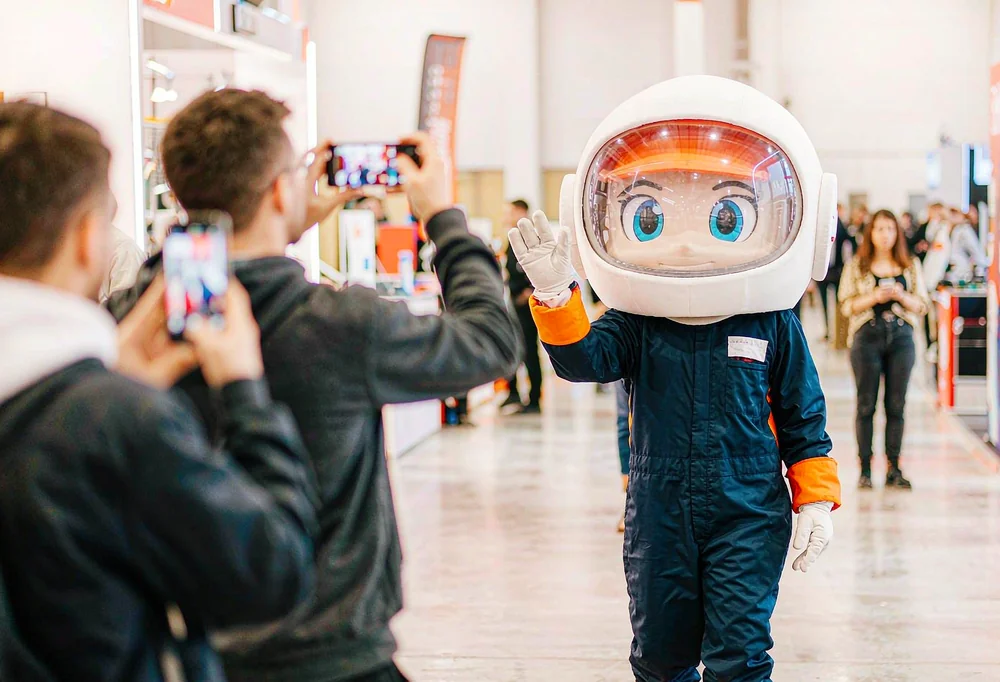
New store opening.
Small volume, fixed date, high visibility. Usually 80–300 units for the opening week plus a week of buffer.
Keychains & CharmsFactory-direct OEM/ODM in China · Shipping to 32 countries
Food & beverage chains
Ferpar supplies chain-wide plush for new-store openings, anniversaries, membership drives and seasonal menus. Low minimums per store cluster, split shipping to regional hubs, and reorders that reuse the same pattern so the second run costs less than the first.
Pain points
“Fifty stores, fifty small boxes.”
Head office cannot receive one container and forklift it to the regions. Delivery has to match the org chart, not the freight forwarder's.
“The opening date sits on the landlord's calendar.”
It does not move for production, and a store that opens without the giveaway loses the first week of the campaign.
“Members want the second one.”
A single design runs out of novelty in a quarter. The programme only works if there is a next unit to collect.
“Every region orders differently.”
Some clusters need 80, some need 800. A national forecast flattens that and leaves stock in the wrong city.
“Nobody at head office wants to repack.”
Units have to arrive single-packed and store-ready, or the labour cost lands on the store manager.
The brief we need
Store count by region, the campaign month, the membership or menu mechanic, and whether stores receive singles or inner packs. Those four decide the packing and the freight.
How we solve it
The minimum applies per store cluster rather than to the national total, so a pilot in one city is possible without committing the whole estate.
One order, several hubs. Each carton is labelled to the destination hub with its own packing list, so regional distribution does not need to re-sort.
The second and third designs reuse the approved pattern and fabric lot. Reorders skip sampling and typically ship three to four weeks faster.
Production is scheduled against the menu cycle or app campaign date, with the launch week treated as a hard constraint rather than a target.
Single-unit polybag or printed sleeve, inner packs sized to a store's weekly sell-through, and a display carton that can go straight onto the counter.
Store occasions
Each one has a different quantity shape and a different deadline logic.
Occasion 01
Small volume, fixed date, high visibility. Usually 80–300 units for the opening week plus a week of buffer.
Keychains & CharmsOccasion 02
A single hero design across the estate, often with a limited colourway that is not repeated.
Character & Mascot DollsOccasion 03
Series logic: collect two, get the third. Ratio control matters more than total volume.
Series & Ratio ControlOccasion 04
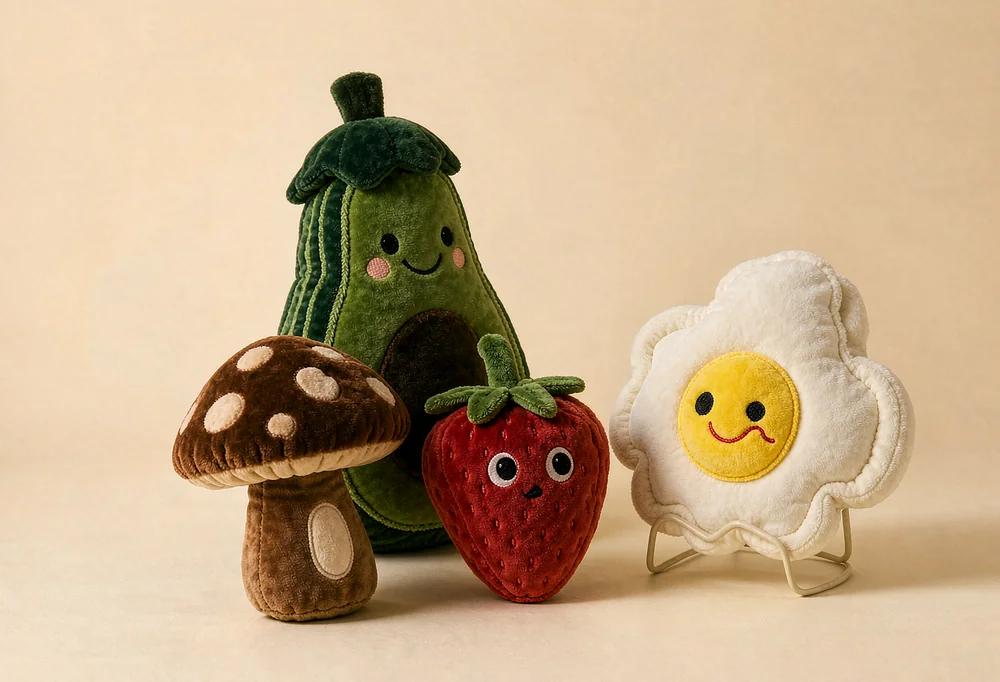
Shaped plush that mirrors the drink or pastry. Cost has to fit a meal-deal upsell.
Shaped Food PlushOrder shape
Indicative structure. The split, not the total, is what makes a chain order work.
| Element | Typical approach |
|---|---|
| Pilot cluster | 1 city, 50–150 pcs, full sampling |
| National rollout | Minimum per cluster, one PO across regions |
| Packing | Single-unit polybag or sleeve, inner pack 10–24 |
| Shipping | Split to 3–6 regional hubs, DDP |
| Second design | Reuses approved pattern, no new sampling |
| Reorder during campaign | From 100 pcs, 3–4 weeks by air |
Most chains underestimate the packing and hub split, and overestimate the production risk. The unit price is rarely what breaks a store campaign; the distribution design usually is.
Why Ferpar
Case gallery
(Client names withheld under NDA. Format and store count shown.)
Case 01
Case 02
Case 03
FAQ
No. Cluster minimums apply, so forty stores might be 400 units in total and still work. What does not work is a national forecast with no split.
Yes, and it is usually the better option. We label to the hub; the hub does the last mile. Freight is quoted per lane.
Yes, within limits. Quantities are set per hub or per cluster; per-store picking is possible but adds a labour line to the quote.
Three to four weeks by air for an approved design, five to six by sea. The pattern is already made, so only production and freight are on the clock.
The plush is a toy, not a food-contact item, but we test to EN71 and ASTM and can supply odour and colourfastness statements if your QA team asks.
Yes. Sleeves and header cards can carry a QR code, a short URL and a campaign code, printed in the same pass.
Chain brief
Tell us the occasion, the store split, the mechanic and whether stores need singles. We reply with a cluster plan and a calendar that starts from launch week.